In unhelpful thinking last week I touched on Cognitive Behavioral Therapy (CBT) and the link between our thinking, self esteem and depression. In a comment a few weeks ago Sherri had asked me if there is a link between self esteem and depression, and i think its a good time to try and answer that.
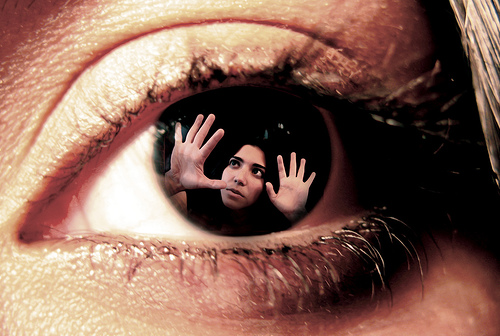
What is depression?
In everyday language its not uncommon for someone to say they’re feeling depressed, as in “bit out of sorts”, “fed up”. Unfortunately it does lead to the view that anyone with depression should just “snap out of it”. Sadly, they can’t. What distinguishes depression from having an off day is the fact that it is a prolonged lowering of mood. The other main component is that it interferes, to varying degrees, with a persons ability to function – you cannot do your normal day to day activities.
Over my years of working in psychiatry there have been changes to the way different types of depression are categorized (or even classified) – and that varies internationally. It is widely accepted that in some cases there is an inherited or genetic component. In others, the root of the depression can be linked to social/environmental factors, or prolonged stress.
According to the World Health Organization depression is the fourth most disabling condition in the world, and expected to rise to second (behind heart disease) by 2020. Interestingly its already second in the developed world, possibly reflecting the role of lifestyle and community in the cause of depression.
The symptoms of depression can be quite diverse – some people getting pronounced anxiety at the same time, others more biological symptoms, such as loss of appetite. The generally consistent factor is feeling low, not experiencing pleasure, lacking motivation.
There are treatments, such as CBT that have become increasingly seen as effective for depression. In milder depression counseling, exercise or other activities may be helpful. But the main treatment used remains anti depressants.
It has always bemused me that some people fill themselves with illicit drugs and/or consume food and drink filled with chemicals, yet can be reluctant to take prescribed medication for mental illnesses. I am certainly not getting into a discussion about the efficacy of medications here. But I would stress the need to follow medical advice and if you want to stop or change medication have a discussions with whoever is prescribing.
Anti depressants can take several weeks to be fully effective, and if one doesn’t work there are others that can be tried. It annoys me when I read advice on forums to “throw away those pills”. Apart from anything else, if you want to come off an anti depressant, some need to be done gradually
Depression is a serious mental illness that requires medical intervention. It should be taken seriously. Whether or not the cause of depression is a particular stressor, low self esteem or unhelpful thinking, if someone is seriously depressed they won’t be in any shape to deal with “the cause” until the depression has lifted.
Is there a link to self esteem?
Like with unhelpful thinking, I am not aware of any studies that have proved a link, or causal factor, between persistent low self esteem and depression. If you break your leg, you usually can give pretty clear reasons why that happened. But as I state above, depression doesn’t fit neatly into a “cause and effect” categorization.
Another, and more helpful, way of trying to find a link is to ask “does self esteem have an impact on mood”. In several posts I have discussed how our thinking effects how we feel. If you think in a persistently negative way, your outlook will be negative and pessimistic. How you feel – your mood – will be affected.
Self esteem is basically how you think about yourself. You cannot “see” low self esteem in the way you can observe a lack of confidence. If you persistently think about yourself in a negative way (which is consistent with low self esteem), it will have an impact over time on your mood. And a persistent low mood is a major sign of depression.
The argument can also work the other way. Someone who normally functions at a high level, with usually high self confidence and self esteem, can start to experience low mood for no apparent reason. As they slide into depression their self esteem and confidence come down with them.
A few weeks ago I read an opinion dismissing self esteem as a concept:-
“It’s a terribly oversold notion, and in reality is simply not all that important.”
I couldn’t disagree more. Our view of ourself impacts on how we subsequently function. Persistent low self esteem will affect mood and make someone more vulnerable to depression and other mental health problems. In later posts I intend looking more closely at the link between self esteem and other aspects of our behavior and make up, such as motivation and will power.
My partner has suffered with depression for many years. She did use anti-depressants for a few years. The withdrawl symptoms should not be underestimated. Neither the difficulty of finding the right anti-depressant – it takes a couple of weeks to find if each one is working, if it doesn’t then there is time needed for it to clear out of the system, before the next one is tried (rinse and repeat).
So if you are open to drugs don’t wait until the depression is severe. Talk to your doctor/shrink early – it can take a long time to find the right drug.
If you want to do without drugs try getting angry. In my experience depression (unless it is a pure chemical imbalance) is anger turned inwards. Turn it outwards – in a safe and supportive environment.
The relation to self-esteem. In my experience depression affects (negatively) self-esteem but self-esteem doesn’t guard against depression.
There is a blog by someone who has battled depression life-long called Storied Mind. Well worth reading.
David,
I’ve never thought of linking low self esteem and depression, but it’s true that the people I know who have low self esteem usually have tendencies of being depressed and have needs for anti-depressant.
This is an excellent post!
Miss Gisele B.
High self esteem cannot prevent depression as such, but low self esteem can be both a trigger or a symptom, Both depression and anti depressants are huge topics, which this post does scant justice to, so i welcome your comments. David
This is a thought provoking post. In my experience low self esteem and depression both have negative thinking as part of their causation. That is one possible connection. Therapies like CBT can help with the negative thoughts, as can something like Byron Katie’s The Work.
Hi David,
Great article (I have suffered from a bit of depression in the past, but not so much anymore). I have just subscribed so looking forward to reading more.
Thanks for digging my PicktheBrain article about setting fire to your career plan. If you want you can check out more of my kooky ramblings over at Rebel Zen.
In my experience I definitely think there is a link, but it can go both ways… low self-esteem can make it more likely that a person will experience depression, but depression can also cause or lower self-esteem.
I knew depression was quite widespread, but I was shocked at the statistics from the WHO. Wow. I wonder, in the ‘developed world’ how much is the high incidence depression caused by work? I know for myself not having a good work-life balance can be a contributor. But, even when I’ve worked at companies who go on about how they are into work/life balance and support their employees – the reality is they didn’t. In my experience, they didn’t even try. But they did expect us to sacrifice our time (and time = life) for them.
Maria – Negative thinking is certainly underpins both low self esteem and depression. CBT is currently becoming more readily available through our National Health Service in the UK. I have never heard of “Byron Katie’s The Work” and fairly sure she has no presence this side of the Atlantic.
Seamus – thanks and welcome!
Donna – On my “things to do list” is to look into the reasons for the disparity in depression figures between developed and non developed worlds. I’m sure work will figure, but don’t forget our working conditions are positively luxurious compared with some.
WHen my parents got divorced I was sufforing from depression because of the things that were happening and I was put through alot of stuff and there was so many changes. I am still suffering from it now. I haven’t told anyone I was depressed but people can just tell. I don’t talk to anyone anymore. I quit sports I just couldn’t stand to be around people. My self esteem isn’t to high either. I think I will try out for winter sports and make new friends I think that would help my depression and self esteem.
I have been treated for depression most of my life. I feel that I do a good job at work and I have been told that. The difficulty that I face is with the environment that I am in. It has been established that it is a negative area due to a work survey. I tend to have these people bring me down because my self esteem is not strong. This tends to increase my anxiety and depression. I was told that I would always be at risk because of my past experiences. The difficulty for me is in this environment to build my self esteem. I try to think positive and people that are negative bring me crashing down. I have gone to the supervisor about this and nothing gets done so I keep struggling in my work relationships. I am on medicine and have been for years. So I agree that low self esteems tends to be a difficult thing to attain and keeps me depressed.
My husmand suffers from depression and anxiety for a long time, suddenly I discovered that he has low self esteem, the problem he is blaming it on me, not giving him enough support at home!! I cant deal with it I feel it is untrue you cant be a doctor on the go. I need help
Thanks for a well thought out presentation of the facts in laymen’s terms. I suffer from brain lesions and two strokes. Following everything I began to suffer from depression. In the beginning I was terrified by the stigmatism that our society places on those who suffer from depression. I’m not nor have I ever been homicidal nor has my depression led me to other deviant behaviors.
I do notice and actually discussed it with a close friend of mine today that impact that it has on my self esteem and self confidence. I am very well educated and quite capable of holding my own in any casual conversation on current events, religion and politics or just about any other subject matter.
So, I have decided that since I have noticed the link (for me) between the depression and self confidence that I have to develop a means of addressing it head on. As a Disabled Veteran I am not fortunate enough to have available to me weekly appointments with a therapist. I’m sure that if I did and could find one that was as proactive as yourself I would find it easier to develop a means to help myself overcome some of the peripheral impacts on my life of depression.
Hi, I just started getting low-self esteem about 13 years ago after my life change,me having kids and being in a relationship that was not supportive, I lost my confidence within myself and I use to be a very strong confident person, also I lost to people that really love me so much which was my grandmother and brother that kept me head strong and encourage me and motivate me .and now I’am isolated from people and sometimes the world, and I stay depress on how my life use to be and now things have change for the worst , so I believe low self esteem can bring on a depress person,because they don,t have that stability and support nomore that made them feel like they were somebody.